Concrete dining tables: solid, render, indoor, garden
Updated
Concrete dining tables read solid the way nothing else really does. We bring together a curated selection from The Range, Robert Dyas, Furniture in Fashion and a long list of other UK retailers. read more…
109 Concrete Dining Tables from 6 UK Retailers in July ’26





Solid concrete versus concrete-effect
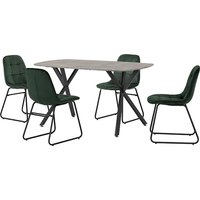
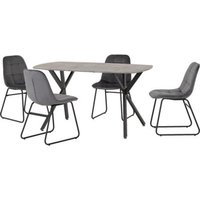
Solid cast concrete is the real thing: a poured slab, often with a steel reinforcing mesh inside, sitting on a hardwood or powder-coated steel base. A six-seater in solid concrete weighs 80kg upwards and needs two strong adults to position. Concrete-effect tops are different beasts entirely; they are usually MDF or fibre-cement wrapped in a printed laminate, or a thin concrete render bonded to a lighter core. The render versions are convincing close up and weigh a third of the solid stuff, which matters if you live above the ground floor or rent and might move next year.
Sizing and the floor underneath
A 180cm solid-concrete table sits comfortably at around 160kg with the base. Floor matters: a suspended timber floor in a Victorian conversion will flex under that load, and over time you can end up with a perceptible dip. On a concrete or screeded floor, no problem. If you are not sure what is under your floorboards, lift one and check the joist spacing before committing to anything in the solid range. For everyday seating, a 180cm rectangular table seats six, and a 140cm round seats four to six depending on chair size.
Indoor or garden
A lot of concrete tables are now sold dual-purpose: indoor dining for most of the year, garden table over summer. The honest answer is that any concrete table can live outdoors, but only sealed concrete keeps doing so without staining. Look for a table described as "fully sealed" or "frost-proof" rather than just "weather-resistant". Garden Trading and Cox and Cox both stock proper outdoor-rated concrete dining tables in the £600 to £1,200 range. If a piece costs sub-£400 and claims to be outdoor-suitable, it is almost certainly a render-on-fibre-cement build, which will craze in a hard British winter.
The look, and what it walks with
Concrete pulls a room towards Scandi, industrial, or a softer modern country feel depending on what you put around it. Pale oiled-oak chairs warm it up; black metal chairs sharpen the industrial read; rattan or rush-seat chairs soften it into something more rustic. The grey is rarely a flat grey. Most concrete tables have a slight mottle, sometimes flecks of aggregate, sometimes hairline crazing across the surface that is part of the material rather than a fault. If you want a uniform, photo-perfect grey, concrete is the wrong choice; pick a polymer-resin top instead.
Sealing, staining and care
Concrete is porous. An unsealed top will pick up red wine, olive oil and turmeric within a week of moving in, and those stains do not come out. A factory-sealed top with a food-safe acrylic or beeswax finish handles everyday spills if you wipe within an hour or so. Reseal once a year for an indoor table, twice a year for a garden one. Coasters under hot pans are still sensible; thermal shock can micro-crack a sealed surface even when the seal itself holds. Avoid bleach and strong citrus cleaners; soapy water and a soft cloth is all most days need.
Where the value sits
Sub-£500 buys a render-on-MDF or render-on-fibre-cement top that looks the part for indoor use and will last five to seven years before edges chip. £600 to £1,200 is the sweet spot for proper sealed solid-concrete tops on a steel or oak base, with retailers like Garden Trading, Cox and Cox and Made-replacement ranges at Next Home pitching here. Above £1,500, expect hand-finished pieces from independent makers, often with a guarantee on the seal and a longer lead time. Pick by the use you actually have planned, not the photograph.